
Light-filtering or blackout pleated blinds: which should you choose?
As the days get shorter and it gets dark earlier outside, you want your home to feel cosy without passers-by being able to look straight in. During the day, however, you still want plenty of natural light. The right pleated blinds help you balance light, privacy and atmosphere. Should you choose a light-filtering fabric or blackout pleated blinds? KeJe offers four fabric categories, each with its own characteristics. We explain the differences and help you find the fabric that best suits your needs and the different rooms in your home.
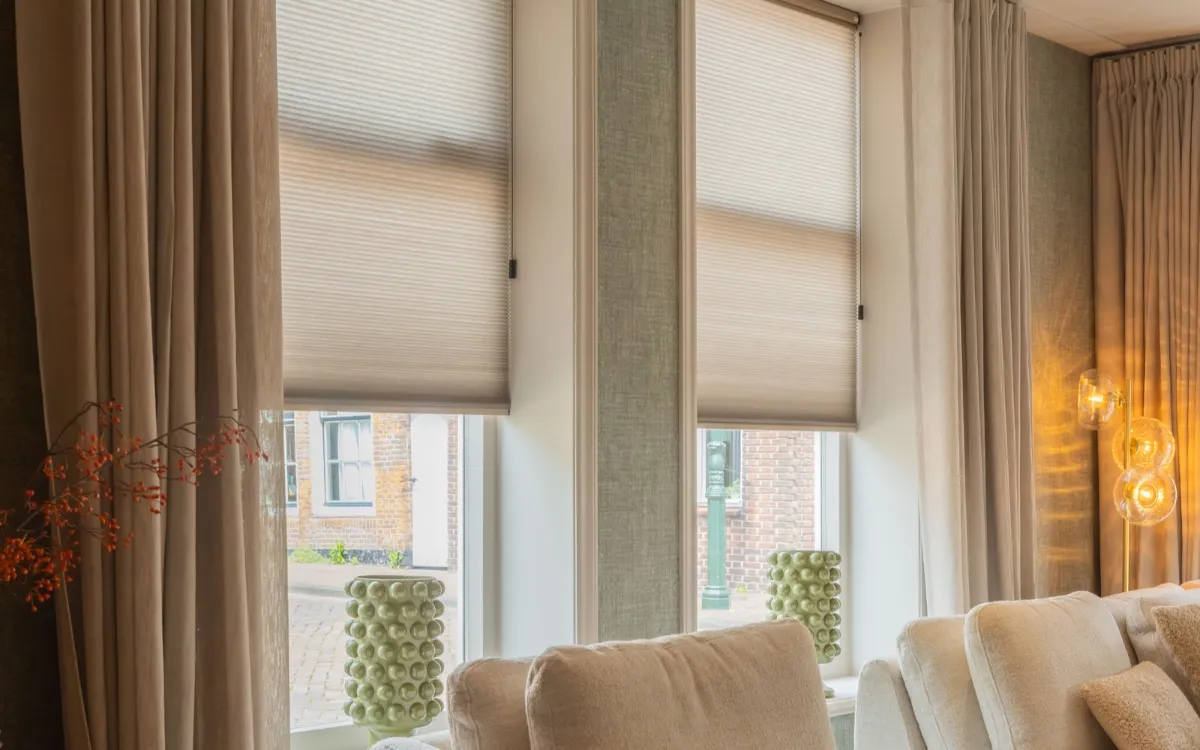
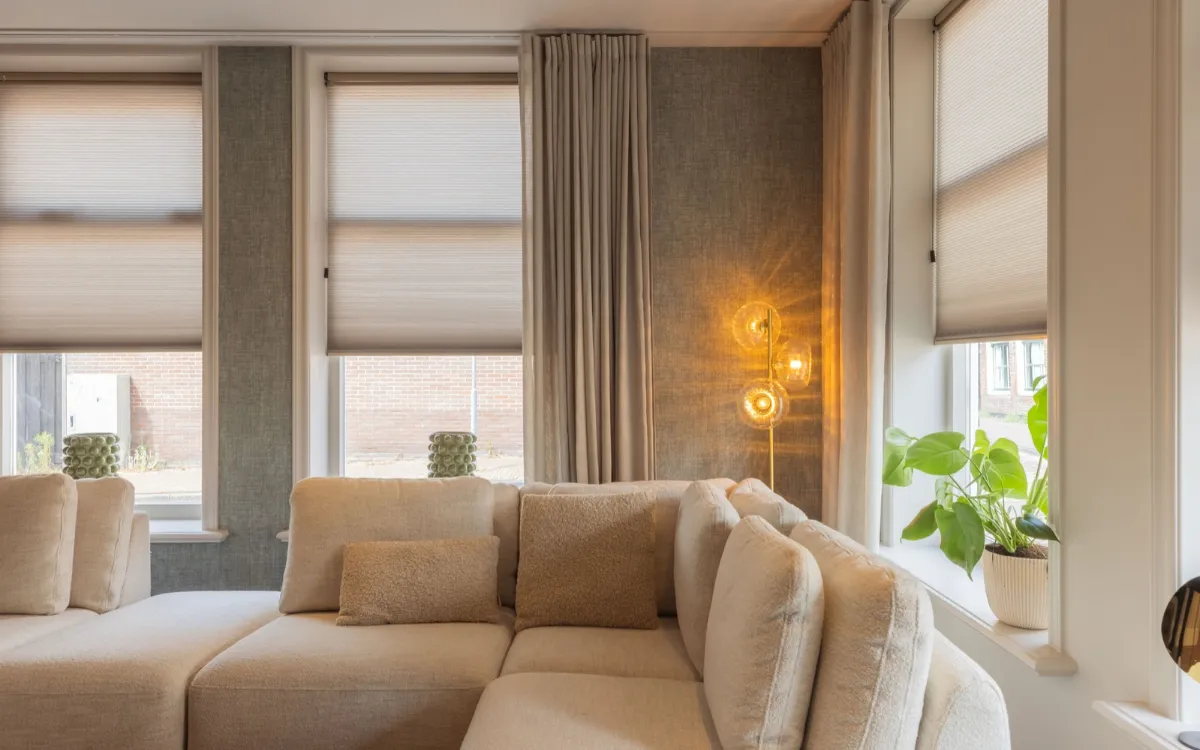
What is the difference between light-filtering and blackout pleated blinds?
The main difference is how much light the fabric lets through. Light-filtering pleated blinds soften natural daylight and create a gentle, welcoming atmosphere. Depending on the fabric, they can also provide privacy without making the room completely dark.
Blackout pleated blinds block light, making them ideal for rooms you want to keep as dark as possible. How dark the room becomes also depends on the type of pleated blind and how it is fitted. Framed pleated blinds fit closely against the window frame, keeping light gaps to a minimum. With free-hanging pleated blinds, small gaps may remain along the edges.
What types of pleated blind fabric does KeJe offer?
KeJe offers four fabric categories: A, B, C and D. The main differences are the fabric construction, how much light passes through and the level of privacy they provide. A and B fabrics have a single pleated layer, while C and D fabrics feature a double-layered honeycomb structure.
A fabric: decorative and light-filtering
An A fabric is a single-layer pleated fabric designed primarily for its decorative appearance. It lets in daylight and gives the window a light, airy look. Depending on the fabric selected, some visibility through it may remain. As a result, A fabrics offer less privacy than the other categories.
B fabric: opaque but still light-filtering
A B fabric has one pleated layer and combines natural daylight with privacy. The fabric lets light in but is not see-through, so you cannot look directly through it into the room. It softly filters daylight without completely darkening the space.
C fabric: fully blackout
A C fabric is a double-layered pleated fabric with a honeycomb structure and a blackout middle layer. The fabric itself does not let light through. The two layers form small air pockets, creating the characteristic honeycomb structure.
How dark the room ultimately becomes depends on the type of pleated blind and how it is fitted. Framed pleated blinds sit closely against the window frame, minimising light gaps. With free-hanging pleated blinds, small gaps can remain around the edges.
D fabric: light-filtering DUO fabric with privacy
A D fabric has the same double-layered honeycomb structure as a C fabric but still lets in daylight. It filters incoming light while providing privacy, as you cannot look directly through the fabric.
The main difference compared with a B fabric is the construction: B fabrics consist of one pleated layer, whereas D fabrics have two layers with air pockets between them. This gives the two fabrics different textures and appearances.
KeJe also offers luxurious light-filtering fabrics, including options with refined textures or a linen-look finish. These combine the practical benefits of a D fabric with a warm, stylish appearance, adding extra character to your window coverings.
Which fabrics are available for framed and free-hanging pleated blinds?
Not every fabric type is available for every style of pleated blind. At KeJe, framed pleated blinds such as Splendid Pliss are available in all four fabric categories: A, B, C and D.
If you choose free-hanging pleated blinds, you can select C or D fabrics. These double-layered fabrics give you the choice between blackout performance and light-filtering privacy.
Which pleated blind fabric is best for each room?
The best pleated blind fabric for your home depends mainly on how you use the room. In the bedroom, you may want to block out as much light as possible, whereas in the living room you may prefer to make the most of natural daylight.
Which pleated blinds are best for the living room?
In the living room, you often want plenty of light without passers-by being able to look straight inside. Privacy becomes particularly important during the darker months, when you switch on indoor lighting earlier in the day.
A B or D fabric is therefore a good choice. Both let in natural light and provide privacy. If your priority is a decorative finish and overlooking is not a concern, an A fabric can also work beautifully.
Which pleated blinds are best for the bedroom?
A C fabric is usually the best choice for the bedroom. This blackout pleated fabric blocks light, helping to reduce disruption from early morning sun, streetlights and other outdoor light sources.
If you do not need to black out the bedroom completely and mainly want privacy, a B or D fabric may also be suitable. Bear in mind that these fabrics allow daylight through, so the room will remain lighter.
Which pleated blinds are best for the kitchen and home office?
Natural daylight is often especially important in the kitchen and home office. You want enough light for cooking or working while preventing people outside from looking straight in.
A B or D fabric strikes a good balance. Daylight is filtered and direct views into the room are reduced. This can be particularly helpful if your window faces the street.
How can you prevent people looking in when it is dark outside?
During the day, it is usually brighter outside than inside. Once darkness falls and you switch on your lights, this changes. With decorative or see-through fabrics, it can become easier for people outside to see into your home.
For privacy in the evening, choose an opaque B fabric, a light-filtering D fabric that provides privacy, or a blackout C fabric. These prevent a direct view through the fabric, provided the relevant part of the window is fully covered.
Many KeJe pleated blinds also have top-down/bottom-up operation, allowing you to decide which part of the window to cover. For example, you can cover just the lower section for privacy while leaving the top open for daylight. Any uncovered part of the window can still allow people to see inside.
Can you combine light-filtering and blackout fabrics?
Would you like to enjoy softly filtered daylight during the day and be able to darken the room in the evening or when sleeping? You do not necessarily have to choose just one fabric.
With KeJe Day ’n Night, you can combine two different pleated fabrics in a single aluminium frame. For example, you can use a light-filtering fabric during the day and a blackout fabric in the evening or at night.
Find out more on the KeJe Day ’n Night product page.
Discover the right pleated blind fabric for your needs
Whether you choose a decorative A fabric, an opaque B fabric, a blackout C fabric or a light-filtering DUO fabric, each has its own advantages. The best choice depends on how much daylight you want to keep, how much privacy you need and which room the blinds are for.
KeJe offers a wide selection of pleated blinds in different colours and fabrics. Want to com
The right window covering for your window? That can be quite a search. Our KeJe dealers will be happy to help. They can tell you all about the convenience of our window decoration and insect screens. Whether you want in-frame window decoration for your plastic frames, don't mind drilling into your wooden frames or want to experience the convenience of electrical window decoration.
Find a dealer


